Designing for
human-Nature Relatedness
How can we design things that help people notice nature, experience it differently, interact with it, and ultimately develop a stronger relationship with the natural world?
8278 Design Project (Laschke), WS2026/27Positive human–nature relationships erode
In his bestselling novel The Swarm, Frank Schätzing describes an ecological dystopia in which nature turns against humanity. Whales attack ships, dangerous organisms spread, and changes in the oceans threaten entire coastal regions. Scientists eventually discover that an intelligent collective life form, the Yrr, is behind these events, responding to humanity’s massive destruction of marine ecosystems.
Of course, Schätzing’s novel remains fiction. There is no intelligent life form, no Yrr, intentionally turning nature against humanity. Yet the idea of nature becoming increasingly alien or even threatening to us is not entirely fictional. Research suggests that positive human–nature relationships can erode, particularly in urbanized societies, while fear, dislike, and disgust toward nature, referred to as biophobia, may become more widespread. For instance, Jensen et al. (2025) describe how such negative relationships can develop into a vicious cycle. Reduced experiences with nature can contribute to aversion and avoidance, which in turn further reduces opportunities for positive encounters with nature.
But what if design could make a difference?
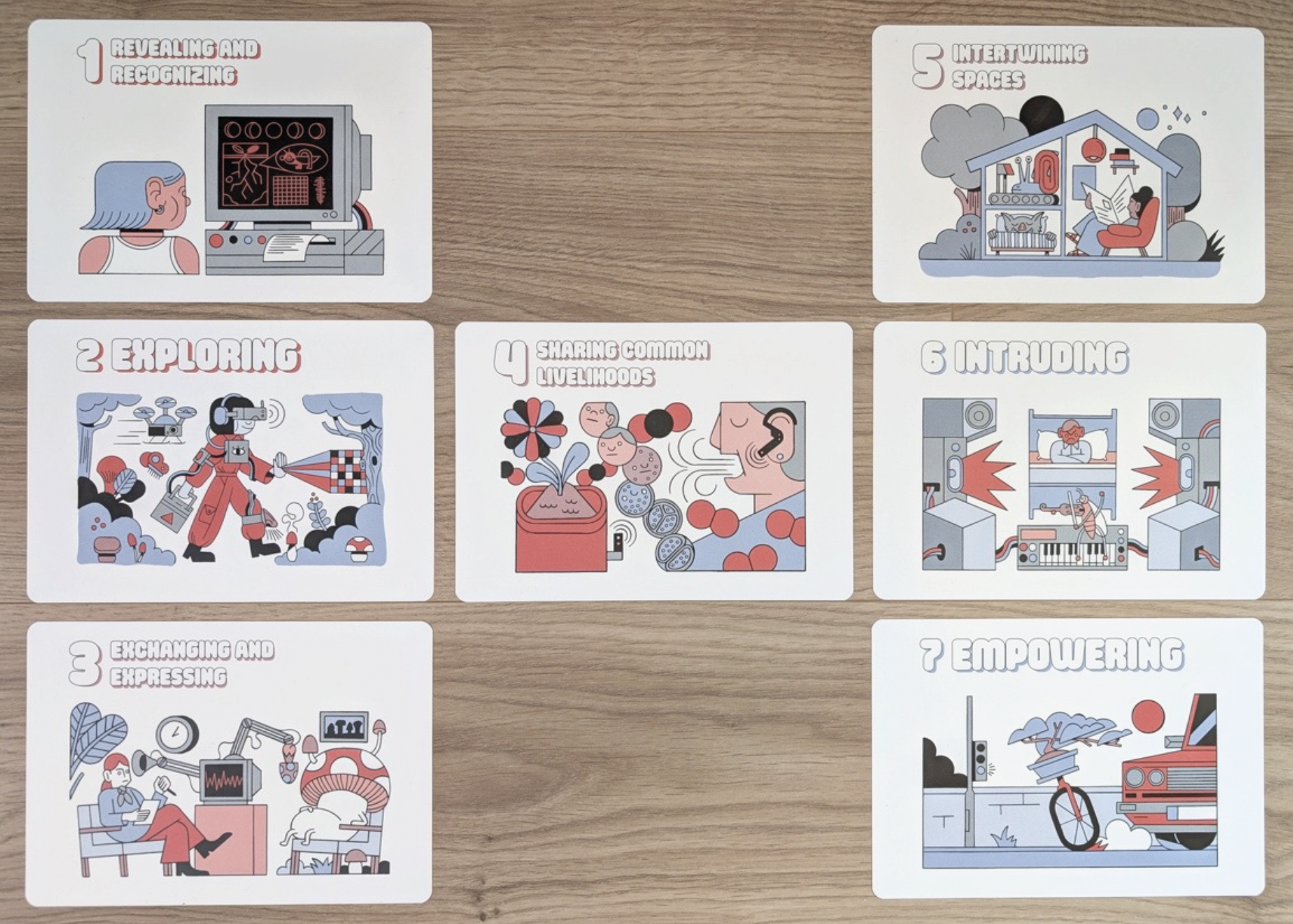
Overview of the seven design strategy cards by Kneile et al. (2025)
Illustrations by Dirk Kesseler, image by the authors.
human–nature relationships and on the role that technology and designed artifacts can play
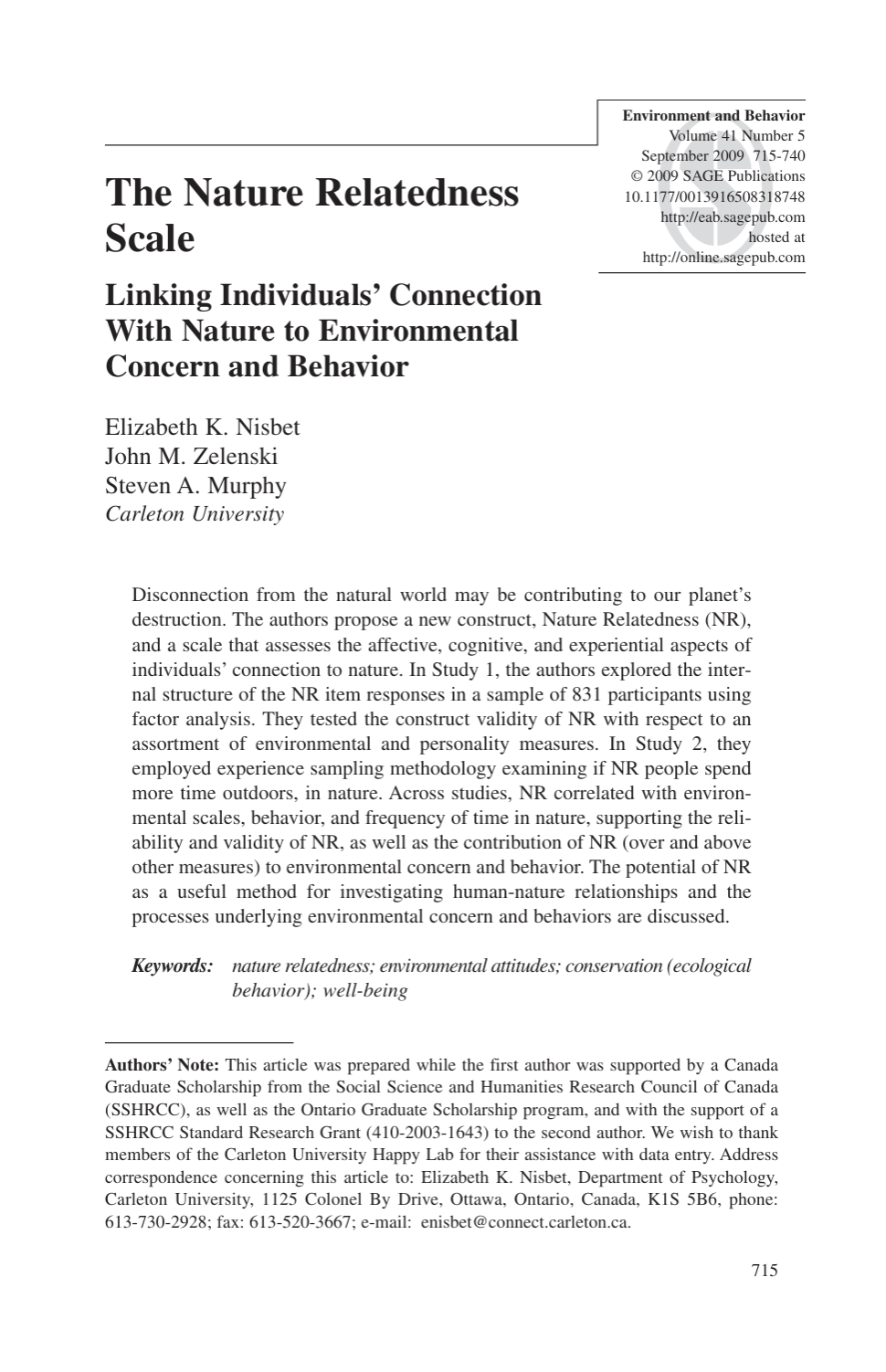
This design project explores how designed things, technologies, and interventions can contribute to a more positive relationship between humans and nature. A central concept will be Nature Relatedness. Nature Relatedness is the affective, cognitive, and experiential relationship individuals have with the natural world. For instance, Nisbet et al. (2009) introduced Nature Relatedness as a construct for understanding these different dimensions of our connection with nature. Importantly for this studio, their research also found Nature Relatedness to be associated with environmental concern, time spent in nature, and environmental behavior.
At the beginning of the studio, we will draw on current research on human–nature relationships and on the role that technology and designed artifacts can play in shaping them. This will include international research as well as work from my own research group. For example, Kneile et al. (2025) systematically examine how interactive technologies have been designed to foster human engagement with nature. Together, we will use these studies to identify different strategies through which design can encourage people to notice, experience, interact with, understand, or develop relationships with nature.
We will then incorporate these findings into our own design concepts and prototypes. The aim is to create tangible interventions that have the potential to strengthen Nature Relatedness. The medium is deliberately open. Students may build and program interactive objects, work with electronics, create physical products, 3D-print artifacts, develop printed communication materials, or design instructions, toolkits, and other forms of intervention. The focus is not on a particular technology or design discipline, but on a common question:
How can we design things that help people notice nature, experience it differently, interact with it, and ultimately develop a stronger relationship with the natural world?
Design as a means of shaping relationships with Entities of Nature
Throughout the studio, we will develop initial ideas into concrete concepts and, ultimately, tangible, experienceable prototypes. Design will therefore be understood not only as a way of solving environmental problems, but also as a means of shaping relationships: creating situations, encounters, and experiences through which humans can relate differently to other living beings and the natural world.
This perspective is part of a broader sustainability framework. Strengthening Nature Relatedness is not only valuable for the human–nature relationship itself. Nature Relatedness has been linked to environmental concern and behavior, making it a potentially important pathway toward pro-environmental behavior (PEB). Conversely, biophobia can influence how people use natural environments, value nature, support conservation policies, and behave toward other living organisms.
The overarching goal of the design project is therefore to explore design as a means of fostering positive human–nature relationships. We will design and build things that create or intensify experiences with nature, explore their potential to strengthen Nature Relatedness and counter processes of alienation and biophobia, and ultimately ask whether design can contribute to more sustainable ways of living with the natural world.
References
Nisbet, E. K., Zelenski, J. M., & Murphy, S. A. (2009). The Nature Relatedness Scale: Linking Individuals’ Connection With Nature to Environmental Concern and Behavior: Linking Individuals’ Connection With Nature to Environmental Concern and Behavior. Environment and Behavior, 41(5), 715-740. https://doi.org/10.1177/0013916508318748
Jensen, J.K., Persson, A.S. and Soga, M. (2026), Toward a unified understanding of people’s aversion to nature: biophobia. Front Ecol Environ, 24: e70019. https://doi.org/10.1002/fee.70019
Madlen Kneile, Judith Dörrenbächer, Marc Hassenzahl, and Matthias Laschke. 2025. Mediating Human–Nature Relations through Technology: A Scoping Review of Post-Anthropocentric Artifacts and Their Design Strategies. ACM Trans. Comput.-Hum. Interact. 32, 5, Article 51 (October 2025), 51 pages. https://doi.org/10.1145/3743674